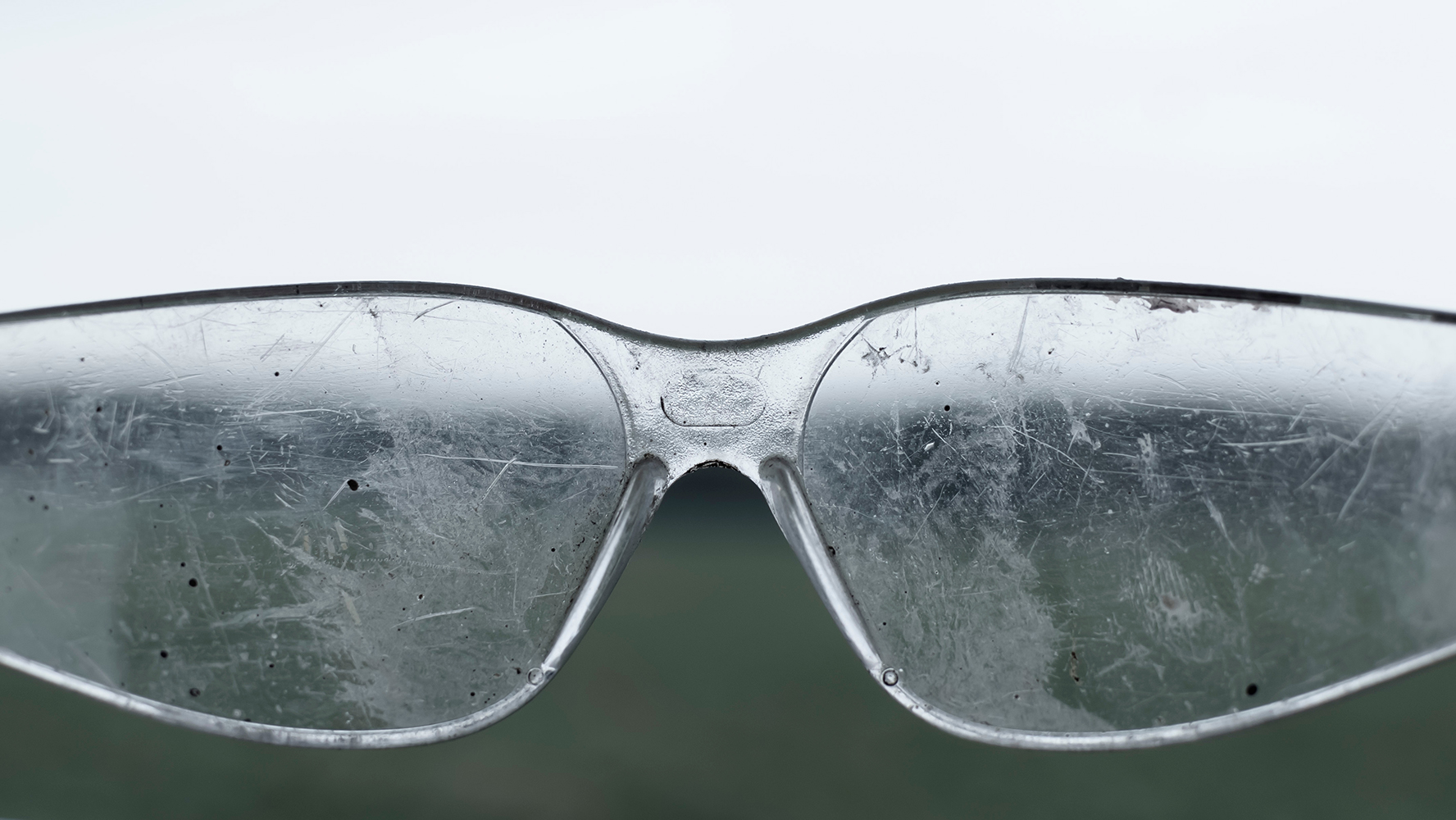

Scratched Lenses and Safety Risks: Why Clear Vision Matters
Most people don’t think twice about a few scratches on their safety glasses.
They’re still wearable. They still fit. Nothing is cracked or broken.
So the glasses stay in service.
The problem is that scratched lenses can affect more than appearance. Over time, lens damage can reduce visual clarity, increase eye strain, and make it harder to perform tasks accurately.
That’s why understanding scratched safety glasses risk is important for anyone who relies on protective eyewear throughout the workday.
Because workplace safety depends on more than protection alone.
It depends on being able to see clearly.
Can Scratched Lenses Be Unsafe?
In many situations, yes.
Can scratched lenses be unsafe? They can when the damage begins to interfere with visibility, concentration, or visual accuracy.
Even minor scratches can scatter light and create visual distractions. As scratches accumulate, lenses may become harder to see through, especially in bright sunlight, under artificial lighting, or during tasks that require precision.
Workers often adapt to these changes gradually.
They squint a little more.
They reposition themselves for a better view.
They work harder to focus.
What feels like a small inconvenience can slowly become a safety concern.
Why Clear Vision Matters in the Workplace
Personal protective equipment is designed to help reduce risk.
But protective eyewear serves two important functions at the same time:
- Protecting the eyes from workplace hazards
- Providing clear, reliable vision throughout the day
Clear vision safety glasses help workers maintain awareness of their surroundings, identify potential hazards, and complete tasks with greater accuracy.
Whether you’re reading measurements, operating machinery, inspecting materials, or navigating a busy job site, visual clarity matters.
The ability to see details quickly and accurately can influence both productivity and safety.
When lens clarity declines, performance can decline with it.
Can Scratched Lenses Affect Depth Perception?
They can.
Can scratched lenses affect depth perception? In some cases, scratches and lens damage can make it more difficult for the eyes to process visual information accurately.
This is especially true when scratches are located near the center of the lens or when damage causes glare and distortion.
Depth perception plays a role in many everyday tasks, including:
- Climbing ladders
- Operating equipment
- Handling tools
- Judging distances
- Navigating uneven surfaces
When visual information becomes less clear, the brain has to work harder to interpret what it sees.
That added effort can contribute to visual fatigue and increase the likelihood of mistakes.
Small Scratches Have a Way of Adding Up
One scratch rarely causes immediate problems.
The challenge is cumulative wear.
Daily exposure to dust, debris, cleaning, storage, and normal job site conditions gradually affects lens surfaces. Over time, multiple scratches can create a noticeable reduction in optical clarity.
The change often happens so slowly that workers don’t recognize it.
They simply adjust.
Until one day they realize they’re struggling to see details that used to be obvious.
That’s why waiting until lenses are severely damaged isn’t always the best approach.
The goal isn’t to replace eyewear only after it fails.
The goal is to maintain the level of visibility and protection the eyewear was designed to provide.
Do Safety Glasses Lose Effectiveness Over Time?
Yes.
Do safety glasses lose effectiveness over time? Like any piece of personal protective equipment, safety eyewear experiences wear from daily use.
Lenses can become scratched.
Coatings can degrade.
Frames can loosen.
Components can wear out.
Regular inspection helps identify issues before they begin affecting comfort, visibility, or protection. While quality safety glasses are built for demanding environments, no eyewear remains in perfect condition indefinitely. It’s crucial to understand that with these issues in mind, you should replace these glasses after no more than two years of use. Two years – no more. It’s just not worth the risk.
Should I Replace Safety Glasses Before They Break?
In many cases, yes.
Many workers assume replacement is only necessary when lenses crack or frames fail.
But visible damage isn’t the only reason to replace eyewear.
Replacement may be appropriate if you notice:
- Scratches affecting visibility
- Lens haze or clouding
- Increased glare
- Difficulty focusing
- Signs of visual fatigue
- Damaged frames or components
- Changes in prescription needs
Safety eyewear should support your work, not make it harder.
If seeing clearly requires extra effort, it’s worth evaluating whether your glasses are still performing as intended.